An Overview

Erskine spends more on veterans’ services in Scotland than the next eight major UK charities combined, but its work remains far less widely recognised.
Today, Erskine supports over 1,400 veterans, aged 19 to over 100, with their network of activity centres, support services and care homes. But this challenge is growing, and by 2030, veteran numbers will be as high as 160,000, driving the need for an additional £4million annual donations over the next five years.
Against a squeezed charity landscape, and a public who often feel their duty is done once they’ve pinned their poppy in November, we needed to help them create a new connection – changing how potential donors felt about both the cause and the charity.

We needed to shift focus from remembrance to response, to make people think differently about what a veterans’ charity really does, and to bring Erskine’s bold new purpose to life: Never abandoned. Never lost.
Our starting point was the veterans themselves.
Through Erskine’s stories, we uncovered a powerful truth: for many veterans, their time in the military wasn’t the problem. It was the best time of their lives, where they had identity, purpose and belonging. Their problems really started when they left. Erskine helps them find these things again.
This became our creative advantage: shifting the narrative from military trauma to the human story of loss, recovery and rebuilding. Because no veteran should be left behind. And donations make that possible.

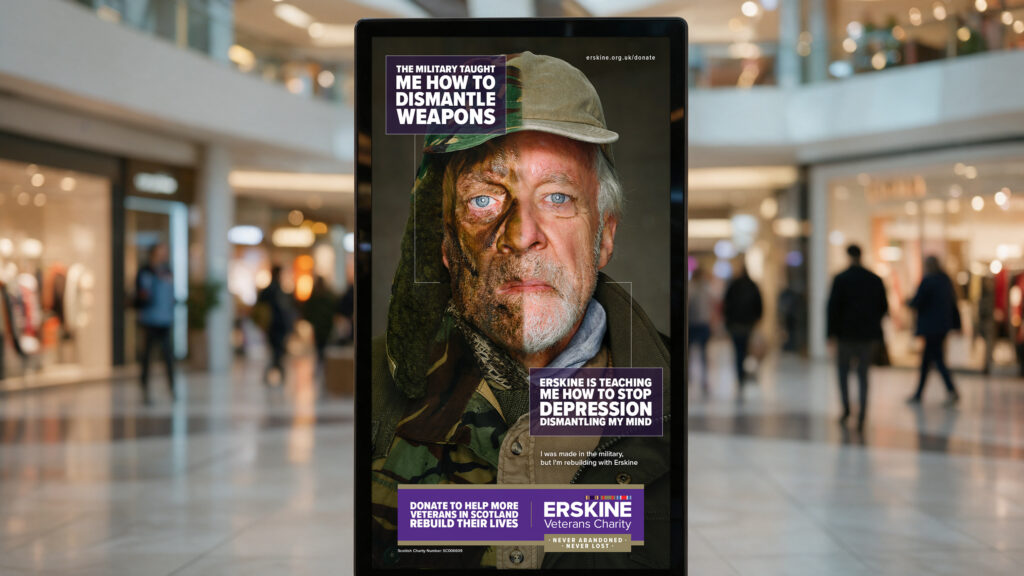
Made in the military. Rebuilding with Erskine.
A cunning play on famous military recruitment ads, the fundraising platform recognises what the services give rather than take away – but shines a light on what comes next. And the real veterans lost in the system.
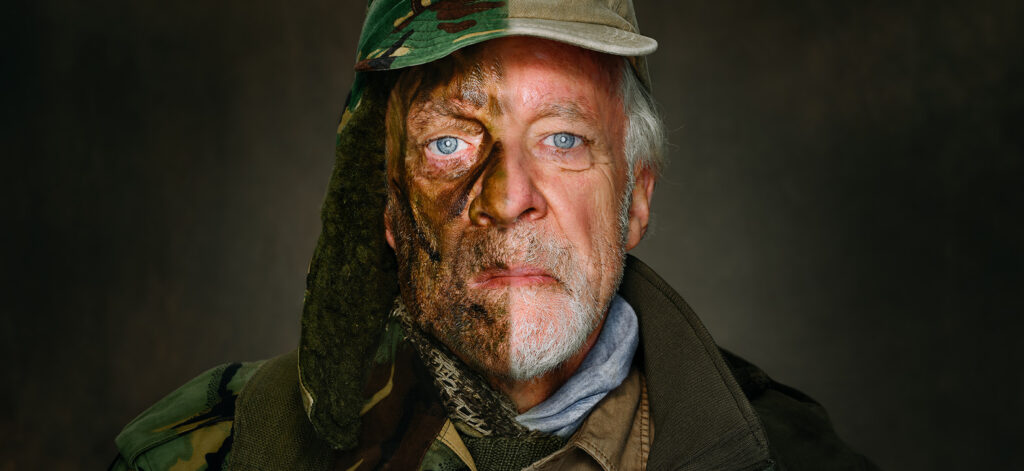
With a piercing split-screen treatment that commands attention and action.

In consumer testing of the campaign prior to launch:
Would think differently about veterans
Would be more likely to donate